


Commercial Transformation | Build Scalable Revenue Engines | b10

COMMERCIAL TRANSFORMATION COMPANY

Revenue cannot scale when your commercial systems are disconnected.

b10 is a Commercial Transformation Company that diagnoses, rebuilds and manages the commercial system from first click to recurring revenue — across website, CRM, marketing, sales, operations, automation, reporting and retention. We turn fragmented growth systems into a more predictable commercial engine.
b10 is an approved vendor on gartner peer insights

The Measurable Impact of Commercial Transformation.

0
Operational Cost Reduction
0
Revenue Expansion
0
Win Rate Growth
These aren’t projections. They’re outcomes delivered across real b10 client engagements. A fully aligned commercial engine doesn’t just improve performance — it compounds it.

THE COMMERCIAL PROBLEM

Fragmented commercial systems turn growth activity into revenue leakage.

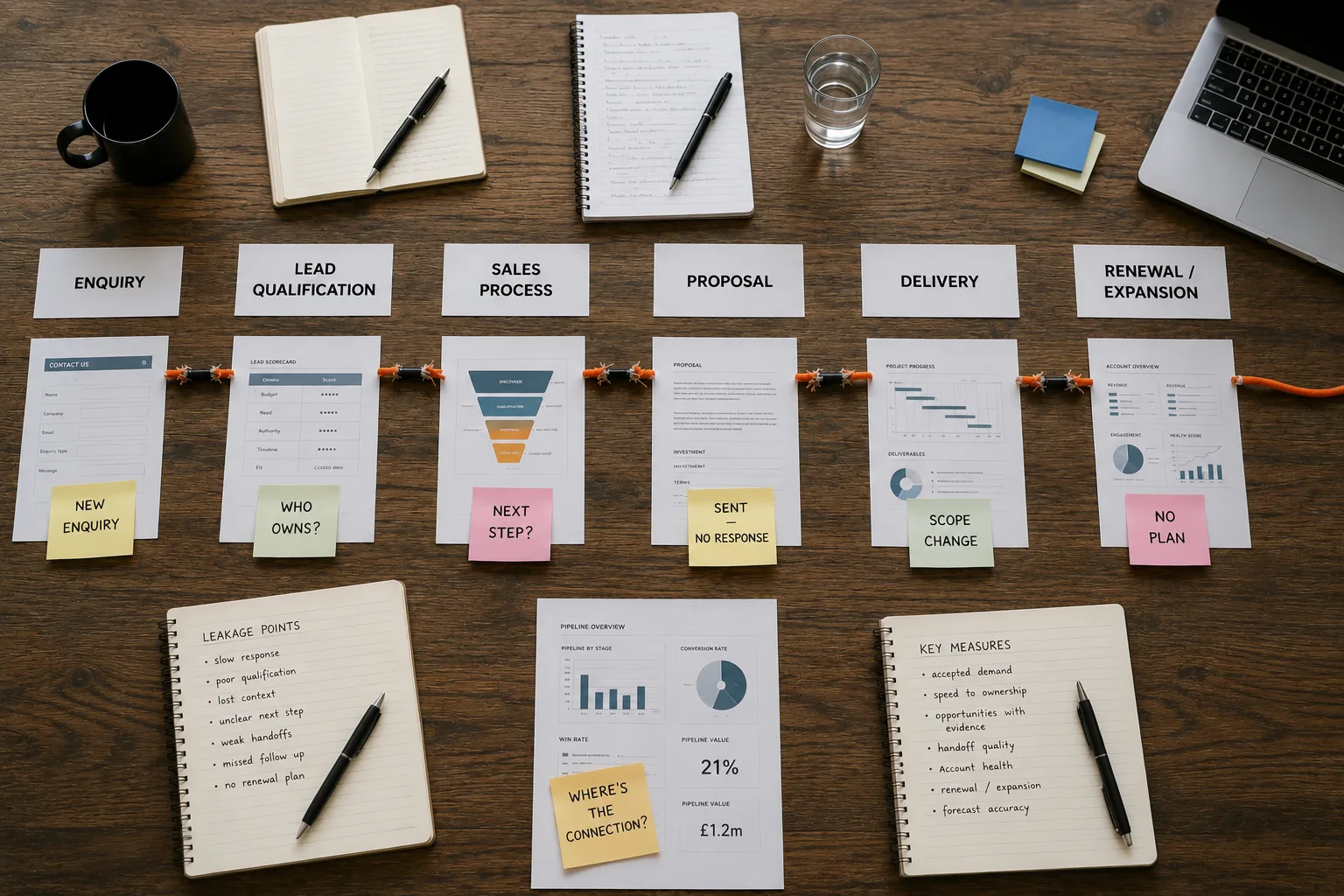
Most companies do not have one isolated problem. They have a disconnected revenue journey: unclear positioning, weak website conversion, messy CRM, inconsistent sales process, manual handoffs, poor reporting and retention that is not engineered.

The visible symptoms.

“We need more leads.”
“Our CRM is a mess.”
“Our website is not converting.”
“Sales follow-up is inconsistent.”
“Everything depends too much on the founder.”

What b10 Diagnoses.

Those symptoms rarely sit in one place. b10 diagnoses whether the real constraint is demand, conversion, CRM, sales process, reporting, handoff, retention or the wider commercial system. Through the CTI, the Commercial Transformation Index, we analyse the 10 domains of the commercial engine and how each domain connects with each other.

Without diagnosis, businesses keep buying isolated fixes while the real leakage continues.

What is Commercial Transformation?

Commercial Transformation is the structured diagnosis, redesign, implementation and ongoing improvement of the commercial systems, processes, tools and operating model that turn market attention into retained revenue. It is not a website project, CRM project, marketing project or digital transformation programme in isolation. It connects the commercial architecture that carries buyers from first click to recurring revenue.

Revenue efficiency.

Make more of the demand, enquiries and sales conversations already entering the business by reducing leakage across the various commercial domains such as the website, CRM, marketing, sales follow-up, handoffs, reporting and retention.

Scalable commercial control.

Give leadership clearer visibility over lead and deal source, pipeline, follow-up, delivery handoff, retention, account growth, reporting and performance, so revenue can be proactively managed instead of guessed.

DIAGNOSE FIRST

CTI shows where revenue is leaking before you spend more on fixes.

CTI, the Commercial Transformation Index, is b10’s commercial maturity diagnostic. It assesses the journey across 10 domains so the next investment is based on evidence, not opinion.

Commercial maturity diagnostic.

The Commercial Transformation Index, the CTI, identifies where the commercial engine is weak, disconnected or underdeveloped across the 10 domains of the revenue journey.

Prioritised constraints.

The output shows what needs attention first: website conversion, CRM, sales process, marketing-to-sales handoff, reporting, operations, ICP, Positioning, pricing, automation, or retention.

Decision clarity.

Leadership can then decide, based on data and benchmarks, whether the next step is focused in-depth implementation, a wider rebuild or managed support through ACE.

What is your CTI Score?

Before you buy another tool, campaign or supplier: understand where the commercial system is actually leaking.

COMMERCIAL REBUILD

ACE turns diagnosis into implementation and managed improvement.

ACE is b10’s implementation and operating layer. After the CTI audit, the ACE framework is used to rebuild the commercial engine and improve it over time through connected content, CRM, process, automation, reporting and managed services.

Content engine.

Builds authority and demand through insight-led content that connects to the buyer journey, ICP, positioning, website and sales conversations.

Operations engine.

Connects CRM, sales process, marketing-to-sales handoff, workflow automation, reporting and delivery handoff into one commercial operating model.

Managed commercial engine.

Keeps the system moving after implementation through ongoing optimisation, reporting, automation and commercial operations support.

b10 Partners and Procurement.

b10 holds 30+ active technology partnerships enabling enterprise-grade Commercial Transformation delivered at the speed and cost-efficiency of a specialist firm.
b10 is an ibm Partner
b10 is a microsoft Partner
b10 is a Dell Expert Network Partner
b10 is a wpengine Partner
b10 is a shopify Partner
b10 is a pipedrive Partner
b10 is a closecrm Partner
b10 is a monday Partner
b10 is a make Partner
b10 is approved on bloom procurement
b10 is approved on etendersni procurement
b10 is approved on constellia procurement

THE B10 MODEL

Diagnose. Rebuild. Manage.

Commercial Transformation works when the right constraint is fixed first. B10 diagnoses where revenue is leaking, rebuilds the commercial architecture behind growth, then manages the system so performance keeps improving after implementation.

Diagnose.

Use the CTI to find where revenue is leaking across website, CRM, sales process, reporting, handoffs and retention, then prioritise the highest-value commercial constraint before more spend begins.

Rebuild.

Use ACE to redesign and implement the systems causing leakage: website conversion, CRM structure, marketing systems, sales process, automation, reporting, operations, ICP, positioning and retention.

Manage.

Continue ACE through managed services, keeping the CRM, reporting, automation, handoffs, retention and commercial performance aligned as the business grows and the revenue system changes to match conditions.

FIRST CLICK TO RECURRING REVENUE

The revenue journey is only as strong as its weakest handoff.

The buyer does not experience your business in departments. They move through one journey. b10 rebuilds that journey so attention, conversion, sales, delivery and retention work as one commercial engine.

Attention & clarity.

The right buyers need to recognise the problem, understand the offer, trust the proof and know the next step. Weak ICP or positioning makes every marketing and website decision harder.

Conversion & capture.

Demand must enter the system cleanly. Forms, CTAs, tracking and qualification should capture enough context for sales to act without creating friction that kills conversion.

CRM & pipeline.

The CRM must reflect how revenue actually moves. Ownership, source data, stages and reporting need to show the truth of the pipeline, not just store contacts.

Sales process & proposal.

Opportunities need defined progression. Qualification, follow-up, proposal rhythm and pricing confidence cannot rely on founder memory or inconsistent individual habits.

Operations & delivery handoff.

Won revenue must move cleanly into delivery. Onboarding, workflow, handoff and automation need to reduce manual chaos, not pass confusion from sales into operations.

Retention & recurring revenue.

Revenue is protected and expanded after the sale. Customer success signals, account rhythm, reporting and expansion paths need to be designed into the operating model.

10 COMMERCIAL DOMAINS

Where b10 usually finds commercial waste.

Revenue leakage rarely sits inside one tool, team or campaign. The CTI examines the 10 domains that shape a commercial system such as the website, CRM, marketing, sales, operations, automation, pricing, ICP, positioning and retention. As a result, this shows where visibility, conversion, follow-up, margin and recurring revenue are breaking down.

website.

Traffic creates little commercial value if the page does not explain the problem, qualify the buyer, build trust and route enquiries into the right next step. The result is attention without enough qualified pipeline or clear sales action.

CRM.

CRM should control pipeline, ownership, follow-up, source tracking and reporting across the revenue journey. When it becomes a database instead of commercial infrastructure, leaders cannot trust forecasts or see where deals are leaking.

marketing.

Campaigns and content need to connect to pipeline quality, CRM data, sales feedback and revenue outcomes. Without that connection, marketing creates activity and visibility, but leaders cannot see what produces commercial return.

Sales.

Sales needs clear qualification, follow-up, stages, pricing confidence, proposal flow and close criteria. Without structure, opportunities depend on personality, memory and founder involvement instead of a repeatable commercial process.

Operations.

Won revenue must move cleanly into onboarding, delivery, workflow and reporting. Weak handoffs create manual drag, damage client experience and turn growth into operational pressure instead of controlled, repeatable expansion.

Automation.

Automation should scale a defined commercial process, not accelerate a broken one. When workflows are built on weak handoffs, poor ownership or bad data, errors happen faster and commercial friction compounds across the system.

Pricing.

Pricing shapes margin, buyer confidence, perceived value and sales consistency. Weak packaging creates hesitation, discount pressure and lost margin, even when the offer, demand and delivery capability are commercially strong.

ICP.

The commercial system must be built around the right-fit buyer. Poor ICP clarity attracts weak-fit leads, wastes sales time and makes conversion inconsistent because the journey is serving prospects the business should not be chasing.

Positioning.

Buyers need to understand why the company is different, why it matters and why action is worth taking now. Weak positioning makes marketing, sales and pricing harder because value has to be explained again in every sales conversation.

Retention.

Recurring revenue needs onboarding, account rhythm, success signals, reporting and expansion paths. If retention is left to delivery alone, revenue is won once, then under-managed instead of protected, expanded and improved over time.

What’s your CTI score?

These leakage points are measurable. CTI turns them into a scored commercial maturity view, so b10 can show what to fix first, what to rebuild, and what should not be touched yet.

FIRST CLICK TO RECURRING REVENUE

Built for ambitious B2B companies with proven demand.

b10 works best when the business already has demand, customers, pipeline or commercial traction, but the system behind growth is not clean enough to scale.
Revenue ambition is higher than the current commercial system can support.
The founder, MD or commercial leader is involved in the decision.
The website, CRM, marketing, sales, operations or retention process feels disconnected.
The business wants diagnosis, implementation and ongoing improvement, not just another supplier.

WHY B10

Most providers fix isolated pieces.
b10 connects the commercial system.

Most providers improve one part of the revenue journey. b10 diagnoses, rebuilds and connects the full commercial system — from website conversion and CRM implementation to sales process, automation, operations and retention.

A better website will not fix a disconnected revenue journey.

Website agencies can improve design, UX, content structure and website conversion, but they rarely own CRM handoff, lead qualification, sales follow-up or wider commercial performance.

What they usually fix

Design, pages, CMS and website performance — improving presentation, UX and page structure more than pipeline flow.

What often remains disconnected

CRM handoff, lead qualification, attribution, sales follow-up and revenue visibility often stay outside the website project.

How B10 is different

B10 treats the website as the first commercial handoff, connecting conversion, routing, CRM and sales process.

CRM implementation only works when it reflects how revenue actually moves.

CRM implementers can configure fields, pipelines and dashboards, but CRM alone does not fix buyer journey, sales behaviour, follow-up discipline, source tracking or forecast trust.

What they usually fix

Platform setup, data structure, fields, pipelines and dashboards so the CRM works technically and looks organised.

What often remains disconnected

Buyer journey, qualification, follow-up discipline, source tracking and real source-to-revenue reporting stay weak.

How B10 is different

B10 designs CRM around how revenue actually moves, linking pipeline structure to sales process and reporting.

More demand will not help if leads leak after the click.

Marketing agencies can improve campaigns, channels and lead generation, but demand generation often stays disconnected from CRM quality, sales feedback, attribution and revenue outcomes.

What they usually fix

Campaigns, content, channels and lead generation activity to increase traffic, awareness, enquiries and visibility.

What often remains disconnected

Lead quality, CRM routing, conversion logic, sales feedback, attribution and retention impact remain difficult to see.

How B10 is different

B10 connects marketing to pipeline, sales process and revenue outcomes so demand creates measurable commercial value.

Strategy without implementation leaves the commercial system unchanged.

Strategy consultancies can diagnose problems and define a roadmap, but practical implementation, CRM change, automation and operating discipline often remain unowned after the strategy phase.

What they usually fix

Diagnosis, strategy, recommendations and operating model design that clarify direction and improvement priorities.

What often remains disconnected

Implementation, CRM configuration, automation, reporting and day-to-day commercial change often stall after advice.

How B10 is different

B10 moves from diagnosis into rebuild and managed improvement, turning commercial strategy into operational execution.

Automation scales the process including the broken parts.

Automation consultants can build high functioning workflows and integrations, but automation without commercial process clarity often accelerates poor handoffs, weak ownership and bad reporting.

What they usually fix

Workflows, integrations, alerts, data movement and task automation to reduce manual steps and repetitive admin.

What often remains disconnected

Process design, ownership, exception handling, reporting logic and commercial consequence often stay unresolved.

How B10 is different

B10 standardises the process before automating it, so automation scales control, visibility and commercial consistency.

One hire rarely fixes a cross-functional commercial system.

An internal hire can strengthen one role or function, but one person rarely owns the full commercial architecture across website, CRM, sales, marketing, operations, ICP, Positioning, Pricing, Automation and retention.

What they usually fix

One function, role or operating gap inside the business, usually within a single team or commercial priority.

What often remains disconnected

Cross-functional architecture across website, CRM, sales, marketing, operations, automation and retention remains patchy.

How B10 is different

B10 gives the business cross-functional commercial systems capability without relying on one hire to cover everything.

Do you know where you are leaking revenue?

If the problem crosses multiple functions, isolated fixes will keep missing the point.

WHY COMPANIES TRUST B10

Commercial Transformation needs more than advice. It needs diagnosis, rebuild and ownership.

Most growing companies already have activity: a website, CRM, campaigns, sales conversations, tools and delivery processes. The problem is that those parts often do not work as one revenue system. b10 helps leaders find where revenue is leaking, rebuild the right systems and operate the commercial engine from first click to recurring revenue.

Find the real constraint.

Before recommending another website, CRM, campaign or automation, b10 identifies where the revenue journey is breaking. CTI gives the work structure, so commercial improvement starts with evidence and the right priority.

Connect the moving parts.

Revenue depends on how website, CRM, marketing, sales, operations, automation and retention work together. b10 connects those parts into one commercial engine, so tools, channels and teams support one revenue journey.

Rebuild what Matters.

b10 moves from analysis into implementation: CRM structure, website conversion, sales process, lead routing, reporting logic, automation, operations and managed improvement. The aim is operational change that improves control.

private and Public sector.

b10 supports private-sector companies that need faster commercial control and procurement-led buyers that need structured delivery. The focus stays the same: find leakage, rebuild the right systems and create measurable control.

START HERE

Find where revenue is leaking.

Send the commercial context. b10 will review where the likely constraint sits and recommend the right next step: CTI, focused implementation, commercial system rebuild or managed support.
No generic software pitch. No agency retainer push.
The first step is diagnosis.
Homepage contact us

Questions About Commercial Transformation, CTI and Building a Better Commercial Engine.

Clear answers for founder-led and MD-led B2B companies trying to understand whether they need more leads, a better CRM, a stronger sales process, or a wider commercial transformation.
What Is Commercial Transformation?

Commercial Transformation is the structured improvement of the systems that turn demand into revenue. It connects website, CRM, marketing, sales, operations, automation, reporting and retention into one commercial engine.

For B2B companies, the issue is rarely one isolated tool. Revenue usually leaks between handoffs: the website does not qualify the buyer, CRM does not reflect the sales process, follow-up is inconsistent, reporting is unclear, or retention is not managed properly.
B10 diagnoses where the commercial system is breaking, then rebuilds the parts that need fixed.

Start your Commercial Transformation

How Is Commercial Transformation Different From Digital Transformation?

Digital transformation usually focuses on technology, platforms and process modernisation. Commercial Transformation focuses on the systems that create, convert, manage and retain revenue.

A company can have modern tools and still leak revenue through weak positioning, poor website conversion, messy CRM, inconsistent sales follow-up, disconnected marketing, manual handoffs and underdeveloped retention.

B10’s focus is not technology for its own sake. The focus is revenue efficiency and scalable commercial control from first click to recurring revenue.

What Problems Does Commercial Transformation Solve?

Commercial Transformation solves the root causes of inefficient B2B growth. It addresses problems such as poor lead quality, weak website conversion, CRM chaos, inconsistent sales process, disconnected marketing, manual workflows, unreliable reporting and under-managed retention.

The visible symptom may be “we need more leads” or “our CRM is a mess”. The deeper issue is often that the commercial system is not designed to move buyers cleanly from first click to recurring revenue.

Find where revenue is leaking

What is the CTI?

CTI, the Commercial Transformation Index, is B10’s commercial maturity diagnostic. It identifies where revenue is leaking across the commercial journey before more money is spent on websites, CRM, marketing, automation or sales activity.

CTI gives leadership a structured view of the commercial system: what is working, what is disconnected, what needs fixed first and what should not be touched yet.

It is the diagnostic layer before implementation.

Get your CTI score

Do we need a full CTI audit before working with B10?

Not always. If the problem is narrow and obvious, B10 can start with a focused implementation such as CRM structure, sales process, website conversion, reporting or automation.

However, if the issue crosses multiple areas — website, CRM, marketing, sales, operations, handoffs or retention — CTI is usually the better starting point. It prevents the business from buying another isolated fix while the real constraint remains hidden.

How do we know whether we need more leads or a commercial system rebuild?

You need more leads when demand is genuinely too low and the commercial journey is already converting well. You need a commercial system rebuild when enquiries, referrals, traffic or sales conversations already exist but revenue still feels inconsistent, manual or hard to forecast.

Common signs include weak lead qualification, missed follow-up, poor CRM visibility, unclear ownership, slow proposals, manual handoffs, inconsistent onboarding and weak retention rhythm.

More leads will not fix a leaking commercial system. They usually make the leakage more expensive.

Audit the commercial system

Can B10 improve our CRM, sales process and customer journey together?

Yes. B10 works across CRM implementation, sales process design, pipeline structure, lead routing, reporting, workflow automation, onboarding and retention systems.

The point is not to make the CRM look cleaner. The point is to make the CRM reflect how revenue actually moves through the business. That means connecting source tracking, qualification, follow-up, ownership, proposal stages, delivery handoff and account growth.

A CRM should become commercial infrastructure, not a contact database.

Can B10 work with our existing tools and tech stack?

Yes. B10 can work with existing CRMs, websites, marketing tools, automation platforms and operational systems where they are commercially useful.

The first question is not “which tool should we use?” The first question is “what commercial job does this tool need to perform?” If the tool supports the revenue journey, B10 will optimise and connect it. If it creates friction, B10 will recommend a better route.

The tool should serve the commercial system, not the other way around.

Is B10 suitable for founder-led and MD-led B2B companies?

Yes. B10 is built for founder-led and MD-led B2B companies with proven demand, commercial ambition and systems that are not yet scalable enough to support the next stage of growth.

The strongest fit is a business that already has clients, revenue, enquiries, referrals, pipeline or market traction, but lacks control across website, CRM, sales process, marketing, operations, reporting or retention.

B10 is probably not the right fit when the requirement is only a cheap isolated task with no appetite for diagnosis, process change or leadership involvement.

What does a Commercial Transformation project include?

A Commercial Transformation project usually includes diagnosis, commercial systems design, implementation and ongoing improvement. The exact scope depends on where the commercial system is leaking.

Common work includes CTI diagnosis, website conversion improvement, CRM implementation or optimisation, sales process redesign, lead routing, reporting, workflow automation, marketing-to-sales handoff, onboarding, retention systems and managed commercial engine support.

The goal is not a report. The goal is a commercial engine that performs with more clarity, control and consistency.

Are You Public-Sector Approved?

Yes. B10 is available through public procurement routes including eTendersNI, Bloom/NEPRO and Constellia, supporting public-sector and framework-led buyers that need structured commercial, digital, CRM, workflow or service improvement.

For public-sector buyers, B10’s value is practical delivery: diagnosing the operating problem, improving visibility, connecting systems, reducing manual friction and creating a clearer route from demand or service access through to delivery and reporting.

How long does Commercial Transformation take?

Timelines depend on the size and complexity of the commercial system. Focused implementation can take a few weeks. A wider commercial system rebuild may take several months and is usually delivered in phases.

B10 moves fastest when leadership is involved, access to systems is clear, decisions are made quickly and the business is willing to improve process, not just software.

The first step is diagnosis. Once the constraint is clear, B10 can recommend whether the right route is CTI, a focused rebuild, CRM implementation, automation, managed services or a wider Commercial Transformation project.

Book a commercial diagnostic

How Is b10 Different From Traditional Consultancies or Big 4 Firms?

B10 is different because it combines commercial diagnosis, implementation and managed improvement in one model. Traditional consultancies often focus on strategy, advisory work, governance and large transformation programmes. B10 focuses on the commercial systems that directly affect revenue: website, CRM, sales process, marketing-to-sales handoff, operations, automation, reporting and retention.

For founder-led and MD-led B2B companies, this creates a more practical route. B10 identifies where revenue is leaking, rebuilds the parts of the commercial engine that need fixed, and helps manage improvement after implementation.

B10 can also partner with larger consultancies, Big 4 firms or enterprise delivery teams when a project needs additional scale, compliance or specialist capacity. The difference is that B10 brings the Commercial Transformation lens: first click to recurring revenue, not transformation activity for its own sake.

What If I Believe We Already Have Things Figured Out?

That’s often exactly when growth stalls.

Internal teams are too close to see the gaps. Commercial Transformation surfaces what’s hidden — process inefficiencies, data blind spots, revenue leakage, and growth opportunities that internal perspective alone can’t identify.

Even high-performing businesses benefit from external commercial structure. b10’s role isn’t to replace what works — it’s to identify what’s slowing it down, and amplify what isn’t.

START WITH DIAGNOSIS

Stop guessing where revenue is leaking.

You have seen the symptoms, the leakage points and the system b10 uses to diagnose them. Now send the commercial context. b10 will review where the likely constraint sits and recommend the right route: CTI, focused implementation, wider commercial rebuild or managed support.
No generic sales pitch. No software-first recommendation. No isolated fix before the real constraint is understood.
Homepage contact us

The Full Commercial Engine

Our Commercial Transformation Services

Revenue doesn’t come from individual tools. It comes from the system they form together. b10 transforms, integrates, automates, and optimises every component of your commercial engine — converting disconnected tools into one unified, measurable growth machine.

Website

Your website is often the first touchpoint of your commercial engine — rebuilt for speed, conversion, and full integration and automation across your CRM, marketing, sales, and operations stack.

CRM

CRM is the backbone of predictable revenue. b10 implements, optimises, and automates the systems that align your sales, marketing, and operations into one consistent, revenue-producing engine.

Sales

Using the b10 Sales Framework from pipeline design to automation and reporting, b10 rebuilds sales operations for accuracy, efficiency, win rates, and measurable, predictable performance.

Marketing

b10 unifies marketing channels, data, content, and automation — so your audience moves from awareness to closed opportunity with measurable, attributable ROI.

Operations

b10 streamlines and automates workflows, eliminates inefficiencies, and connects internal systems — so teams move faster, deliver better, and scale without operational drag.

automation

We automate tasks, data flows, and handovers across your entire commercial ecosystem — compressing timelines, reducing cost, and eliminating drag at every stage.
b10 the commercial transformation consultancy

Commercial Transformation

The Full-System Rebuild For Predictable, Compounding Growth.
This is where everything connects — the complete redesign, rebuild, automation, and ongoing management of your commercial engine. Built for scale. Built to compound.